






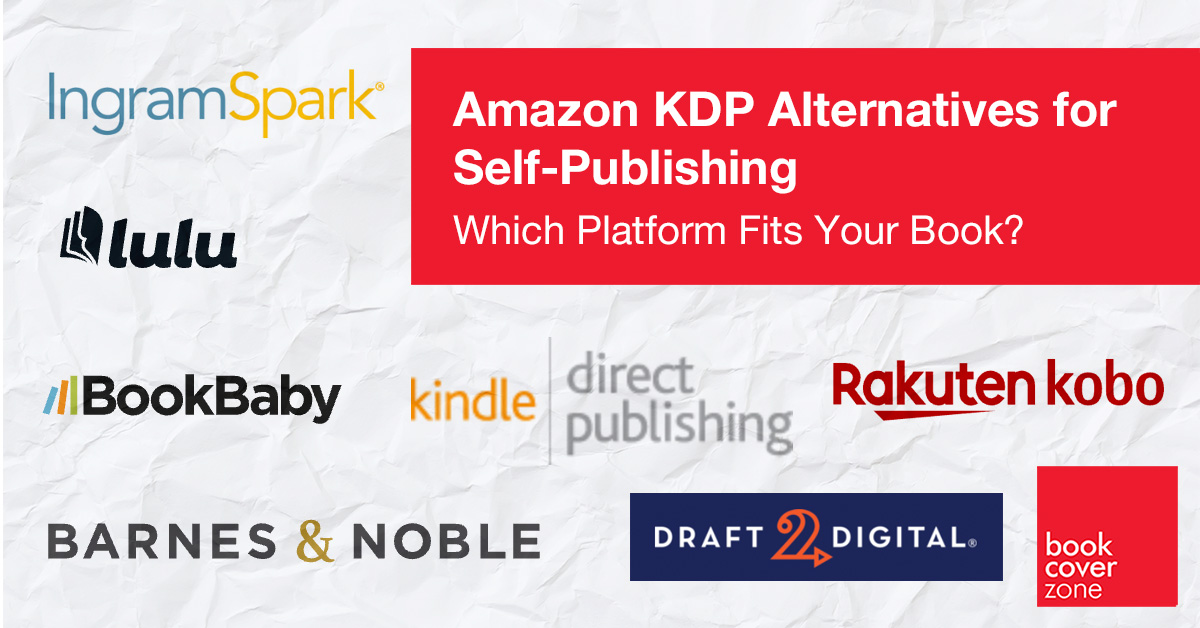
Amazon KDP Alternatives for Self-Publishing: Which Platform Fits Your Book?
Amazon KDP may be the biggest name in self-publishing, but it is not the only route to publication. Many authors now build a wider strategy, using different platforms for print, ebooks, and specialty distribution in order to reach more readers and reduce dependence on one retailer. That approach can open doors to bookstores, libraries, international audiences, and direct sales channels—but it also requires caution, because some platforms can conflict with one another if the same book is listed in overlapping or exclusive ways.
For example, an ebook enrolled in KDP Select cannot be sold elsewhere during that exclusivity period, and print titles distributed through multiple services need to be managed carefully to avoid duplication or distribution confusion. ISBNs need similar attention: if Amazon gives you a free ISBN for a paperback or hardcover, that ISBN belongs to Amazon’s system and cannot be reused on another platform. If you want the same edition to appear on Amazon, IngramSpark, or another distributor, it is usually better to buy your own ISBN so you can use the same number across platforms for that exact edition. That said, you should not reuse the same ISBN for different formats or materially different editions; a paperback, hardcover, or revised edition each needs its own identifier.
A simple rule of thumb helps: use one ISBN per edition, keep your distribution plan consistent, and avoid mixing platform-assigned numbers with cross-platform distribution. Doing that prevents metadata confusion, reduces distribution errors, and gives you far more control over your publishing setup.
At a Glance
| Platform | Best for | Main strength | Main drawback | Print quality |
|---|---|---|---|---|
| IngramSpark | Print distribution | Bookstores and libraries | More complex setup | Professional and reliable, especially for standard print books; strong for bookstore-ready editions |
| Kobo Writing Life | Ebooks | International reach | Smaller audience than Amazon | Not a print-focused platform |
| Draft2Digital | Ebook distribution | Easy wide publishing | Takes a cut of royalties | D2D Print exists, but print quality depends on partner services |
| Lulu | Print and specialty books | Flexible formats | Can be expensive | Often praised for strong print quality, though some users report variability |
| Barnes & Noble Press | US ebooks and print | Direct access to B&N | Limited reach outside B&N | Solid, professional output; often compared favorably with IngramSpark |
| Apple Books for Authors | Apple ebook sales | Direct Apple storefront access | Best for Apple readers | Not a print service |
| PublishDrive | Wide distribution | Centralized workflow | Subscription model | Depends on print partners; not primarily known for print output |
| BookBaby | Full-service publishing | Hands-on support | High cost | Generally positioned as professional-quality, but at a premium price |
IngramSpark: Built for Serious Print Distribution
If your goal is to get your book into bookstores and libraries, IngramSpark deserves a close look. It is one of the strongest alternatives to Amazon KDP for authors who care about physical distribution and want their book to feel like a real retail title. It supports standard print books well and also offers premium color options for image-heavy projects.
The print quality is generally professional and dependable. Many authors use it for paperbacks and hardcovers because it produces clean, bookstore-ready books, especially when the file is prepared correctly. The tradeoff is that IngramSpark can feel more demanding than KDP, with a steeper setup process and more attention required to formatting and specifications.
Kobo Writing Life: A Strong Path for Wide Ebooks
Kobo Writing Life is a smart option if you want your ebook to reach readers beyond Amazon. It has a meaningful international footprint and works particularly well for authors who want to build a wide distribution strategy. Because it does not require exclusivity, it fits neatly into a multi-platform publishing plan.
Its strength lies in ebook reach, not print production. If your main concern is how a physical book looks and feels, Kobo is not the platform to judge on that basis. Still, for digital publishing, it is a reliable and respected channel.
Draft2Digital: The Easiest Way to Go Wide
Draft2Digital is designed for authors who want simplicity. Instead of uploading your ebook to multiple retailers one by one, you can publish through one dashboard and reach several major stores at once. That convenience makes it especially attractive for authors who want to save time and avoid technical friction.
Its print service, D2D Print, gives it a broader role than many authors expect. You can use it for print-on-demand paperbacks, but it is still best understood as a distribution platform rather than a traditional print house. In practice, print quality depends on the partner service behind the scenes, so it is wise to test a proof before committing.
Lulu: Flexible, Creative, and Useful for Special Projects
Lulu stands out when a book needs more flexibility than a standard self-publishing platform typically offers. It works well for specialty formats, custom books, and projects where design matters just as much as distribution. If your book falls outside the usual paperback-and-ebook mold, Lulu can be a very practical option.
On print quality, Lulu has a good reputation overall. Authors and reviewers often praise its thick pages, sharp covers, and polished output, especially for visually rich books. That said, some users have reported variability from one order to the next, so ordering a proof is always a smart move before committing to a larger run.
Barnes & Noble Press: Simple and Familiar
Barnes & Noble Press is a straightforward option for authors who want direct access to Barnes & Noble’s ecosystem in the United States. It is easy to work with and gives your book a place in a recognizable retail channel. For authors targeting a US audience, that direct connection can be appealing.
The print quality is generally solid and professional. In practice, it is often described as comparable to IngramSpark, especially for paperback and hardcover books. If you want a reliable print product without a more complicated distribution setup, it is a strong contender.
Apple Books for Authors: Best for Apple Readers
Apple Books for Authors gives you direct access to Apple’s ebook store, which can be a useful piece of a wide-distribution strategy. It is especially valuable if your audience tends to buy books through Apple devices and services. Adding Apple Books can help diversify your income and reduce reliance on a single retailer.
It is not, however, a print-focused platform. If your main interest is the quality of a physical book, Apple Books does not really compete on that front. Its value lies in digital reach and storefront access.
PublishDrive and BookBaby: Broad Reach or Full Service
PublishDrive is built for authors who want wide distribution with a more centralized workflow. It is useful if you like the idea of managing many channels from one place, and it can make publishing feel more organized. Its print quality depends on the partners involved, so it is not usually the first platform authors choose for physical book production alone.
BookBaby takes a different approach by offering a more hands-on, full-service experience. That can be useful if you want support with production, but it comes at a higher cost. The print quality is generally positioned as professional, but the biggest consideration is cost, since BookBaby is usually more expensive than DIY self-publishing tools.
Print Quality Compared
| Platform | Print quality summary |
|---|---|
| IngramSpark | Professional, bookstore-ready, and strong for standard books |
| Lulu | Often excellent, with sharp covers and a premium feel, though quality can vary slightly |
| Barnes & Noble Press | Reliable and professional, often compared favorably with IngramSpark |
| Draft2Digital | Not a primary printer; output depends on the partner service |
| Kobo Writing Life | Ebook-first, so print quality is not a core feature |
| Apple Books for Authors | Ebook-first, so physical print quality does not apply |
| PublishDrive | Distribution-focused; print quality depends on partners |
| BookBaby | Professional-quality positioning, but at a higher price point |
Which Platform Should You Choose?
| Goal | Best platform |
|---|---|
| Bookstore and library access | IngramSpark |
| Easy wide ebook distribution | Draft2Digital |
| International ebook sales | Kobo Writing Life |
| Flexible specialty printing | Lulu |
| Direct Barnes & Noble sales | Barnes & Noble Press |
| Apple storefront sales | Apple Books for Authors |
| Managed wide distribution | PublishDrive |
| Full-service publishing support | BookBaby |
The smartest approach is often to combine platforms rather than rely on only one. A common setup is IngramSpark for print, Draft2Digital or Kobo Writing Life for ebooks, and KDP only if Amazon still plays an important role in your sales strategy. That gives you reach, flexibility, and protection against overdependence on a single store.
Conclusion
Amazon KDP is still a powerful tool, but it is not the only one worth using. If you want broader distribution, stronger bookstore access, or more flexibility in how your book is produced, the alternatives can be just as important as the original. IngramSpark, Kobo Writing Life, Draft2Digital, Lulu, Barnes & Noble Press, Apple Books for Authors, PublishDrive, and BookBaby each solve a different problem, and the best choice depends on your goals as an author.
The most important thing is to plan the system before you publish. Decide which platform will handle each format, make sure your ISBN strategy is consistent, and avoid conflicts between exclusivity rules and overlapping distribution. Once that structure is clear, the alternatives become a strength rather than a complication.