



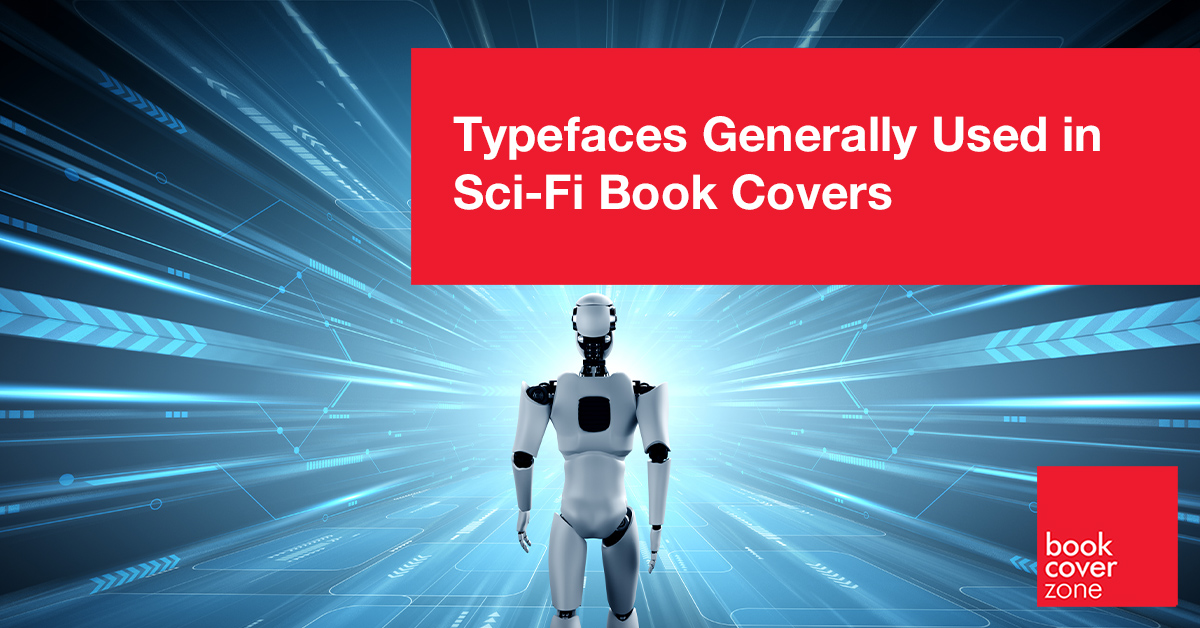
When you look at a science fiction book cover, the font isn't just a label—it is a signal. It tells you whether you are about to embark on a gritty cyberpunk heist, a sweeping space opera, or a quiet, philosophical exploration of the near future.
When we design a sci-fi cover here at BookCoverZone, the conversation usually starts long before we open Photoshop or Illustrator. It starts with the "flavor" of the future the author has built. In the world of science fiction, typography is the bridge between the present and the "what if." If the font is too traditional, the cover feels dated. If it’s too decorative, it becomes unreadable. Finding that perfect balance is what we do every day.
The Geometry of the Future: Sans Serifs
If you walk through the sci-fi section of a bookstore, you will notice one thing immediately: Serifs are rare. Serifs—those little "feet" at the ends of letter strokes—are traditionally associated with history, authority, and the past. Science fiction is about the "next," which is why we almost always lean toward sans-serif typefaces.
Geometric sans-serifs, like Futura or Bank Gothic, are staples in our studio. Futura is a designer’s dream because it is based entirely on the circle, the square, and the triangle. It feels efficient and mathematical. When we use geometric fonts at BookCoverZone, we are tapping into the optimism of mid-century sci-fi—that sleek, NASA-inspired look where the future was bright and organized.
However, for modern "Hard Sci-Fi," we often look for something more industrial. Typefaces like Eurostile or Microgramma have become synonymous with technology. These fonts have a "squircle" shape—a blend of a square and a circle—that mimics the monitors and hull plates of a spaceship. If your book is about technical realism and deep space exploration, these are the shapes that will tell your reader they are in for a grounded, believable experience.
The Cyberpunk Aesthetic: Glitch and Monospaced
When a client comes to us with a cyberpunk or techno-thriller manuscript, our approach changes entirely. The future isn't sleek and clean anymore; it’s cluttered, neon-soaked, and broken. In these designs, we often use monospaced fonts—typefaces where every letter takes up the exact same amount of horizontal space.
Fonts like OCR-A or Courier New (heavily modified, of course) evoke the feeling of raw code, terminal screens, and late-night hacking sessions. But at BookCoverZone, we don't just "slap a font on." For cyberpunk, we treat the typeface like a piece of the world. We might "glitch" the letters, slicing them horizontally or adding digital noise. The goal is to make the title look like it is being projected onto a rain-slicked window in a dark alleyway in Neo-Tokyo.
Space Opera: The Grandeur of Extended Type
Space Opera is about scale. It’s about empires, star-spanning wars, and massive ancient relics. To convey this, we often use "extended" or "wide" typefaces. Think of the classic Cinzel (a rare serif exception) or heavily tracked-out sans-serifs like Michroma.
By increasing the "tracking"—the space between the letters—we create a sense of vastness. At BookCoverZone, we’ve found that a thin, wide font with significant letter spacing creates a cinematic feel. It makes the title look like it’s floating in the vacuum of space. It tells the reader that the stakes are high and the setting is immense.
Distopian Realism: The Brutalist Approach
Not every future is a digital playground or a galactic empire. Some futures are oppressive, grey, and heavy. For dystopian fiction, we often move away from the "high-tech" look and toward "Brutalist" typography. These are heavy, bold, often condensed typefaces like Impact, Bebas Neue, or Agency FB.
These fonts feel like concrete. They feel like a government broadcast or a warning sign on a perimeter fence. When we design for this sub-genre, we often use "all caps" to give the title a sense of urgency. We might use textures to make the letters look like they’ve been stenciled onto a rusted shipping container. It’s not about beauty here; it’s about power and survival.
The Emotional Science Fiction: Modern Minimalist
Lately, there has been a rise in what we call "Emotional" or "Literary" Sci-Fi. These are books like Station Eleven or The Left Hand of Darkness—stories that focus more on the human condition than the engines of the ship.
For these covers, we often choose ultra-light weights of modern sans-serifs like Helvetica Neue (Ultra Light) or Montserrat. By using very thin lines and delicate arrangements, we tell the reader that the story is introspective. It’s a quiet future. It’s a future that feels elegant and perhaps a bit fragile.
Typeface Hacks For Sci-Fi Books
You don’t always need a "Sci-Fi Font" to make a sci-fi cover. At BookCoverZone, we have a few tricks up our sleeves to transform standard typefaces into something from the 25th century:
1. The "Cutout" Trick: Take a standard bold sans-serif and remove small diagonal slices from certain letters (like the crossbar of an 'A' or the spine of an 'S'). This instantly makes the font look like it was laser-cut from steel or projected as a hologram.
2. Extreme Tracking: If you use a very basic font but set the letter spacing to 300 or 500, it goes from "boring" to "Space Opera" immediately. It suggests a high-budget, cinematic experience.
3. The "Missing Link": Try removing the middle bar of the letter 'E' or the 'A'. The human brain will still read the letter, but the missing piece suggests advanced technology or a futuristic alphabet.
4. Glowing Inner Shadows: Instead of a standard drop shadow, we often use a "glow" effect inside the letters. This makes the title look like a neon sign or a power core, perfect for cyberpunk or high-energy adventures.
5. Mixing Weights: Use a very bold font for the first word of your title and a very thin, light version of the same font for the second word. This contrast suggests the relationship between the physical (the ship) and the ethereal (the space).
Choosing a typeface is one of the most important decisions an author can make for their book’s marketing. At BookCoverZone, we take that responsibility seriously. Whether you are browsing our premade collection—where we’ve already done the heavy lifting of matching fonts to genres—or you are commissioning a custom-designed cover, we ensure that every letter on your cover is working hard to sell your story.