Category: Getting published
-
Short vs. Long Book Titles
When it comes to cover design, both short and long book titles can be visually stunning, but the design must be carefully tailored to complement the title length. Short titles benefit from bold, dramatic typography and ample negative space, creating a striking, minimalist aesthetic that can command attention. In contrast, long titles often necessitate smaller,…
-
Author or Title: What Takes Precedence on a Book Cover?
In the intricate art of book cover design, the interplay between the author’s name and the book title is paramount. These elements not only guide prospective readers to make a purchase but also set the tone for their reading journey. How they are presented—both typographically and hierarchically—can make all the difference in catching a reader’s…
-
Book Covers vs. Movie Posters – Deciphering Design Differences
Crafting a book cover is a delicate endeavor that goes beyond merely dressing up a book; it’s about creating an emotional and psychological connection with potential readers. The design is a whisper rather than a shout, inviting the reader into a world gradually unfolded by the author. Each element on a book cover—from the font…
-

Tease, Don’t Tell With Your Book’s Cover
The art of book cover design is much like creating the perfect appetizer. It should be enticing and suggest the flavor of the main course without satisfying the hunger.
-
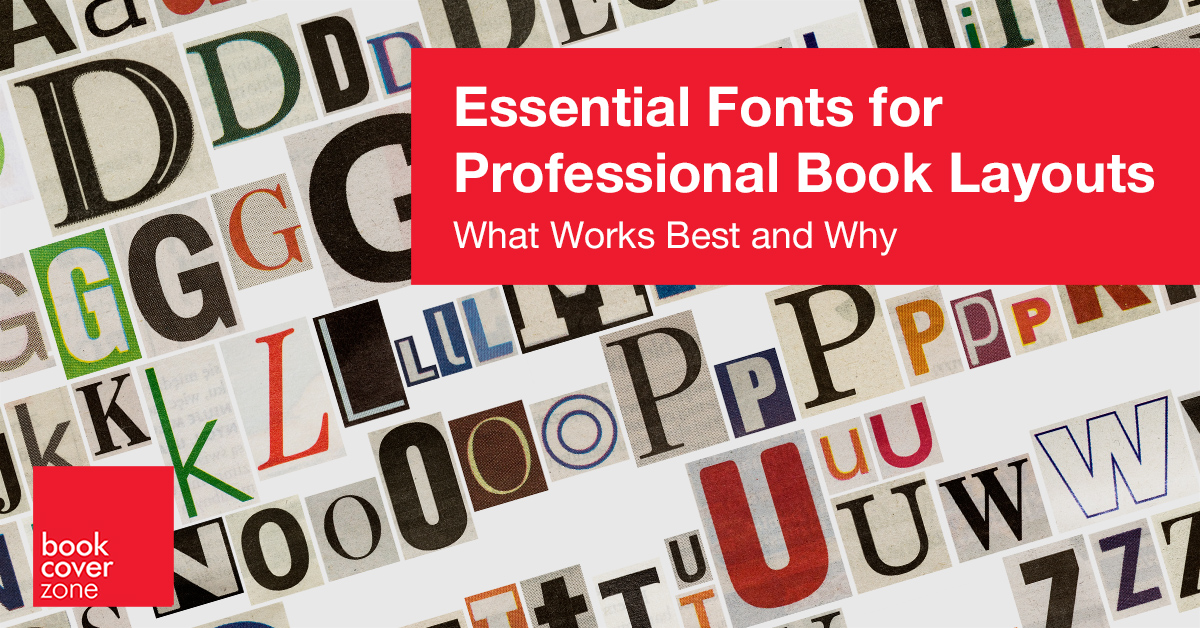
Essential Fonts for Professional Book Layouts
The judicious choice and combination of fonts are fundamental in book design, significantly affecting a publication’s market success. By selecting appropriate serif and sans-serif fonts and using them conjointly, publishers not only ensure a book’s aesthetic and readability but also augment its marketability and reader engagement. As subtle as these choices may seem, they are…
-
Do Authors Make Good Money?
Most authors write because they are passionate about storytelling and not for financial gain. While there’s always a chance of hitting it big, like with any form of entertainment, it’s a slim one—and often not the best motivation for taking up the pen.
-

The Great Literary Debate: Hardcover vs Paperback for Your Next Book
Whether you’re a seasoned author or a newcomer to the publishing scene, understanding the implications of your binding choice can significantly impact your book’s journey from the press to the reader’s hands.
-
How Long Does It Take to Publish a Book on Amazon The Ultimate Guide In the digital age, publishing a book has become more accessible than ever, especially with platforms like Amazon leading the way. Aspiring authors often wonder just how long it takes to transform their manuscript into a published work available for millions…
-
A Strategy for Promoting Your Newly Published Book Online
With the explosion of digital platforms, promoting your newly published book online has become an essential step to ensure its success. The internet offers inexhaustible resources to reach potential readers, but without a strategic approach, even the most captivating content can go unnoticed. In this article, we’ll explore effective techniques for leveraging the power of…
-
How to Create a Professional Book Cover
In the literary world, the adage “Don’t judge a book by its cover” does not hold true. The stark reality is that a book is often judged, at first glance, by its cover. A professional-looking cover is not just about aesthetic appeal; it’s a critical marketing tool that can determine a book’s success. In this…
-
7 Ways to Make Your Books More Accessible
Reading is a powerful tool for learning, entertainment, and personal growth. However, not everyone can access books in the traditional print format due to various barriers such as visual impairments, physical challenges, or language limitations. Making books more accessible is crucial to ensure that everyone can enjoy the benefits of reading. Here are seven ways…
-
Mastering Amazon KDP: 8 Rules for Becoming a Bestselling Author
Amazon Kindle Direct Publishing (KDP) has opened doors for countless authors to publish their work with relative ease. Here are eight rules to help you become a successful author on Amazon KDP: Success on Amazon KDP often involves a combination of writing talent, marketing savvy, perseverance, and a bit of luck. Continuously learning from your…
-
Print Quality on Amazon KDP
Amazon is one of the largest online retailers in the world and its Kindle platform is synonymous with digital reading. Publishing through Amazon KDP provides instant access to a vast, global audience. Other platforms might not offer the same level of exposure, which is critical for reaching as many readers as possible, especially when building…
-
The Evolution of the ISBN System
In the vast ocean of literature that humanity has sailed for centuries, with millions of books published annually, finding a way to manage and identify each unique work was imperative. Enter the International Standard Book Number (ISBN), a code that’s as much a cornerstone of the publishing world as the authors and books themselves. The…
-
Choosing the Right Paper: Why it Matters in Publishing
When it comes to publishing a book, magazine, or any printed material, many focus on content development, design, and marketing strategies—a rightly so approach since these elements are pivotal to the success of the published work. However, one critical decision that can be easily overlooked is the choice of paper. The type of paper selected…
-
Are AI-generated images the future of book covers?
AI-generated images, powered by advanced machine learning algorithms, have emerged as a compelling option for book cover design, offering a versatile and innovative approach to visual storytelling. However, the suitability of AI-generated images for book covers depends on various factors, and a nuanced consideration of their advantages and limitations is essential. One of the primary…
-
How to structure a book – Front Matter
Each book consists of numerous parts and a good book is an organized book. For centuries these have been the unwritten rules on how books should be organized. So here is the first part of our series on the sections of a standard book, be it a fiction or a non-fiction work. While we’re a…
-
How to choose a color for your book cover design
What is the first thing your brain analyzes when you see a book on a bookshelf? It’s not the title or the author’s name, it’s not the character on the cover image. It’s not the genre, or the price tag. It’s not the thickness or the binding type. The first thing the brain intercepts, before…
-

What fonts are most books printed in?
In the most general and historical sense, typefaces can be classified into two groups: serifs and sans-serifs. A serif is a decorative stroke that finishes off the end of a letter’s stem (which is also called the “feet” of a letter). If the letter possesses this decorative stroke, it’s called a serif font; if not,…
-

How much of the story should a book cover tell?
This is a question we get asked a lot. And this is one of those places where there is a great distinction between a movie poster and a book cover. Both movie posters and book covers have a lot in common, mainly their ultimate goal; to sell the story to the right audience. But while…